By Dr. David Cherian • Convergence between Eastern and Western Medicine
Welcome to a transformational shift in how we think about health. As a Western-trained MD and an Eastern-medicine-trained, licensed acupuncturist, I constantly look at how both systems can work together to improve your health. One of the most common questions that comes up in my clinic is why our health changes with the weather.
In Western medicine, we rarely pay attention to changes in disease patterns throughout the seasons, aside from flu season. However, in Traditional Chinese Medicine (TCM), seasonal change plays a monumental role in understanding health and approaching treatment.
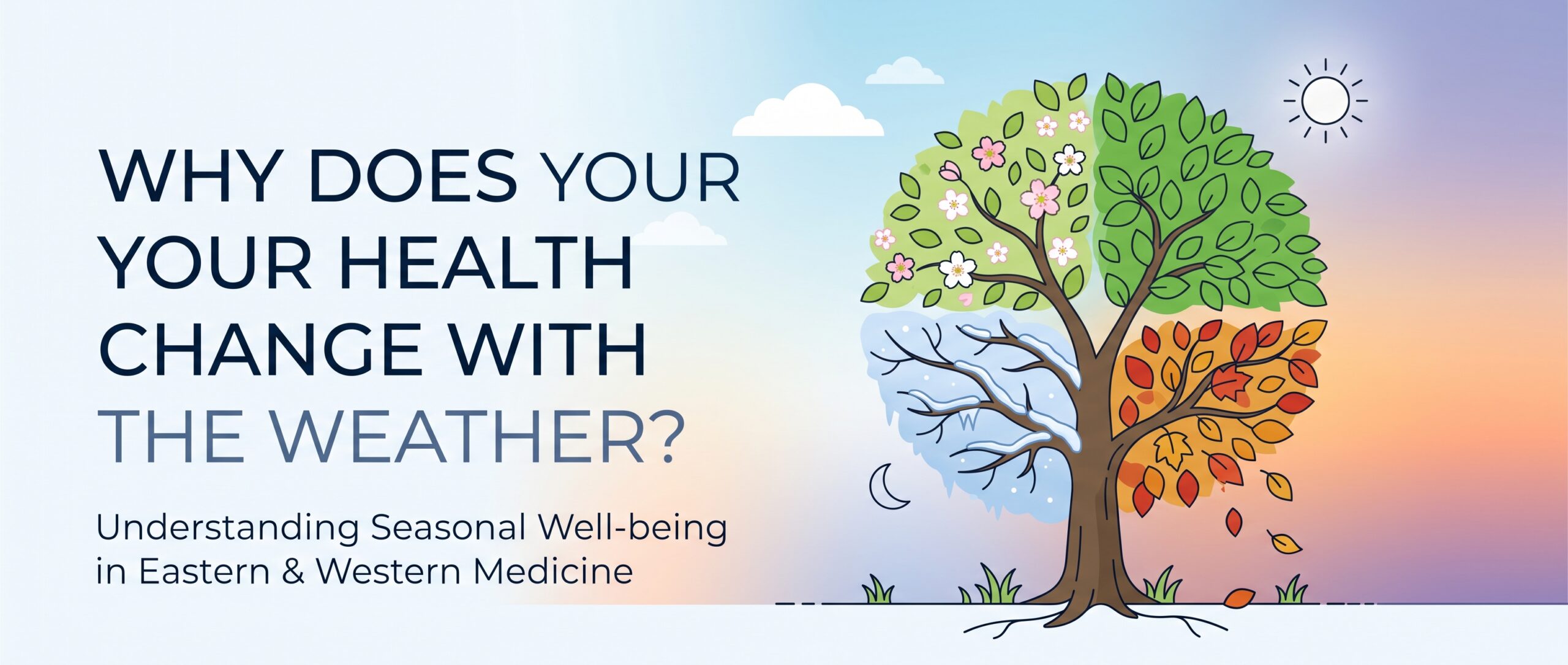
Think about a tree throughout the seasons. The tree is in the same soil, air, and sunlight, but something shifts in the environment that it detects and responds to. In spring, it grows leaves; in fall, they change color; in winter, it hibernates. Just like that tree, our bodies go through subtle but powerful seasonal changes throughout the year.
The Five Seasons in TCM
To understand these shifts, we use the Five Seasons framework in Chinese medicine. As the environment changes, the energy in our bodies shifts toward different organ systems.
Spring
Spring is associated with the Liver and corresponds to the Wood element. It is a time of growth, upward expansion, and rising qi (energy). The Liver connects to tendons and vision. If you have deficiencies here, you may feel better in spring. However, if you have excess Liver issues—too much pressure or rising energy—spring can amplify your symptoms.
Summer
Summer corresponds to the Heart and the Fire element. It is a season of extreme heat and outward expansion, governing circulation, sweat, and the emotion of joy. In summer, everything in the body is moving outward, opening, and dispersing.
Late Summer
Unique to Chinese medicine, Late Summer bridges summer and autumn. It is associated with the Spleen, the Earth element, and dampness. It governs digestion, fluids, and musculature. When the Spleen is weak, this heavy, damp time of year can easily make symptoms worse.
Autumn
Autumn is linked to the Lungs and the Metal element. Just as metal is dry, autumn is when the environment dries out. The Lung system, governing respiration, immunity, and the skin, becomes more active and more vulnerable.
Winter
Winter aligns with the Kidneys and the Water element. It is a time of cold, contraction, and conservation. The body pulls inward to preserve warmth, sending energy deep into the Kidney system, which governs bones, hearing, and the body’s foundational energy.
Why Health Problems Worsen in the Summer
If you live in a humid climate like Houston, you might notice your health issues flaring up during the summer months. Summer and late summer bring intense heat and dampness. Summer corresponds to the Heart and rising heat, while late summer corresponds to the Spleen and dampness.
When you combine high heat with high humidity—such as the bayou networks of Houston—you get a climate that naturally produces warm and damp diseases. Patients with underlying issues related to heat or dampness often feel burdened during this time because their seasonal energy is shifting toward the Heart and Spleen, making them highly vulnerable to the environmental extremes.
How Seasonal Changes Affect Emotional Patterns
Have you ever noticed yourself or someone else feeling depressed in the winter, or irritable in the summer? Emotional shifts are deeply tied to the patterns of the Five Organs and Elements.
In the springtime, rising Liver energy can create more emotional reactivity, leading to worry or anger if your Liver energy is constrained and sensitive to stress. Conversely, winter has less environmental Yang (warming) energy. If you are deficient in Yang energy, you might experience more depression or heaviness as your body struggles to support the emotion of joy. This drop in upward, bright energy is also why long stretches of cloudy, gray weather can impact our spirits.
At our clinic, we always take the environment and seasonal changes into account when creating a treatment plan. We help you navigate these shifts so you can stay as healthy as possible.
Intro
Welcome to the Convergence Podcast. So glad to have you guys back with us. I’m your host, Dr. David Cherian, and on this show we talk about the convergence between Eastern and Western medicine. I use my background as both a Western trained MD and an Eastern medicine–trained, licensed acupuncturist to show how both systems can work together to improve your health and get you the best outcomes.
Today we’re talking about a topic that comes up all the time in my clinic: Why does your health change with the weather? I bring this question up with a lot of my patients to see which seasons they do better in and which seasons make things worse, because that can give us a clue about the underlying pattern. It also matters because, for most patients, I end up shifting their treatment as we move through the different seasons of the year. The seasonal changes affect our bodies just as much as they affect the environment around us.
So today we’re going to talk about what happens in each season, the environmental shifts throughout the year, and the organs they’re connected to in TCM. We’ll look at how those changes impact your health, including the physical and emotional shifts that show up seasonally. And finally, we’ll talk about what you can do to support your health during these different phases of the year
Why does your health change with the weather?
The first thing I want to say about this is that it represents a transformational shift in how we think about health from an Eastern medicine perspective compared to Western medicine.
In Western medicine, we don’t really pay much attention to changes in disease patterns throughout the seasons. We think about it a little bit in terms of flu season, but beyond that, it doesn’t really register on our radar. But in Eastern medicine—specifically Chinese medicine—seasonal change plays a much bigger role in how we understand health and how we approach treatment.
I want you to think about a tree throughout the seasons of the year. Something happens to that tree that prompts it to start growing leaves in the springtime. And we don’t fully understand why that happens. The tree is in the same soil, the same air, the same sunlight. But something shifts in the environment—something the tree can detect, recognize, and respond to—so that when spring comes, it begins to bud, grow leaves, and turn green.
And the same thing happens in the fall. The tree senses a change in the environment that prompts its leaves to change color. By winter, the leaves fall and the tree goes into a kind of hibernation. So throughout the year, the environment and the seasonal changes are impacting the tree’s physiology. They’re dictating what the tree should do next and how it should adjust its growth based on the season.
Likewise, our bodies are going through seasonal changes throughout the year. In the spring, the energy of the body shifts toward the Liver, prompting that Liver energy to rise and grow. When we move into summer, the energy shifts toward the Heart. In autumn, it shifts toward the Lungs—the air dries out, the heat comes down, and the Lung system becomes more active and more vulnerable. And when we get into winter, the energy of the body shifts toward the Kidneys. The body moves into a more contracted, conserving phase, storing and preserving warmth, especially within the Kidney system.
These seasonal shifts are happening whether we notice them or not. And because the body is cycling through these phases throughout the year, it impacts our health in different ways depending on what type of condition you have, which organs are involved, and what treatments we’re applying.
Just like you can see the leaves on a tree change throughout the year, there are changes happening in your body throughout the year as well. Most of the time we’re just not recognizing them. They’re not as obvious. It’s not like your fingernails change color in the fall. A lot of these shifts are more subtle—but they’re absolutely happening.
What are the 5 seasons in TCM?
All right, so I’m going to talk about the seasonal changes using the Five Seasons framework in Chinese medicine. There are different ways to categorize the seasons in TCM, but for this episode I’m going to use the Five Seasons model because it gives the clearest picture of how the organs shift throughout the year.
Let’s start with spring.
Spring is associated with the Liver in Chinese medicine, and in the Five Elements system it corresponds to the Wood element. It’s a time of growth and upward expansion—just like plants sprouting up from the ground or leaves pushing outward from the branches. It’s a season of movement, of qi rising in the body. The Liver is connected to the tendons and to vision, so if you have deficiencies in those areas, you might actually feel a little better in the spring. But if you have excess Liver issues—too much pressure, too much heat, too much rising energy—spring can actually make those symptoms worse because the seasonal energy is amplifying what’s already happening in the Liver.
Next is summer.
Summer is associated with the Heart, and in the Five Elements it corresponds to Fire. Summer is a time of heat—especially here in Houston, where you step outside and the heat just hits you immediately. It’s a season of outward expansion, the exact opposite of winter’s cold contraction. Heart Fire governs circulation, the emotion of joy, and the body fluid of sweat. So in summer, everything is moving outward, opening, dispersing.
Then we have Late Summer, which is unique to Chinese medicine.
In the West, we think of spring, summer, fall, winter. But in TCM, there’s a fifth season that comes after summer and before autumn: Late Summer. This season is associated with the Spleen, the Earth element, and with dampness. And if you live in Houston, you know exactly what this feels like—the humidity peaks, everything feels five to ten degrees hotter than the thermometer says, and the air gets heavy. This is the season of digestion, fluids, and the musculature of the body. When the Spleen is weak, this damp, heavy time of year can make symptoms worse.
Then we move into autumn.
Autumn is associated with the Lungs, and in the Five Elements it corresponds to Metal. Just like metal is dry, autumn is the season when the environment begins to dry out. The humidity of summer and late summer drops, the air becomes cooler, and the Lung system becomes more active. Autumn governs respiration, immunity, and the skin. Depending on the state of your Lung system, this season can either improve your symptoms or aggravate them.
And finally, we get to winter.
Winter is associated with the Kidneys and the Water element. It’s a time of cold, contraction, and conservation. The body pulls inward to preserve warmth and sends that warm, protective energy down into the deepest organ system—the Kidneys. Winter is the peak of the hidden, storage phase of the year. The Kidneys are associated with bones, hearing, and the body’s foundational energy. So when the seasonal qi shifts toward the Kidneys, it can influence your health depending on your constitution and any underlying Kidney related patterns.
In Houston, why does my health problems worsen during the summer time?
To answer this, we need to go back to what we just talked about with the Five Elements and what’s happening during the summer season.
First of all, summer — and especially late summer — is a time of heat and dampness. Summer corresponds to the Heart and the Fire element. It’s a period of rising heat, outward expansion, and increased activity in the Heart system. Then we move into late summer, which corresponds to the Spleen, the Earth element, and dampness.
And in Houston, we get both of these in full force: high heat and high humidity.
Houston is built on bayou networks. There’s water everywhere. There’s dampness in the air almost year round. When you combine that with the intense heat, you get a climate that naturally produces a lot of warm diseases and damp diseases in TCM terms.
So a lot of patients — not everyone, but many — who have underlying issues with heat or dampness notice that their symptoms get worse in the summer. That’s because the seasonal energy of the body is shifting toward the Heart and the Spleen, and the body becomes more burdened by the heat and dampness circulating in the environment.
So if your condition tends to flare during this time of year, especially if you live in a humid environment like Houston, there’s a good chance that one of your underlying patterns involves heat, dampness, or an imbalance in the Heart or Spleen systems.
Can seasonal changes affect emotional patterns?
You might have experienced this yourself, or you might know someone who feels depressed during certain times of the year — maybe in the winter, or during long stretches of cloudy, gray weather — and you can feel that emotional shift. There are also other emotional changes that show up seasonally: more irritability or anger in the summer, more worry or anxiousness in the spring, things like that.
All of this ties back to the patterns of the Five Organs, the Five Elements, and the shifts happening in the body as we move through the cycles of the year.
So, for example, in springtime, the energy of the Liver is rising. The Liver is very sensitive to stress. If you’re someone who gets stressed easily, or you have a pattern in Chinese medicine where the Liver is constrained, you might notice things get worse in the spring. There’s more energy flowing into the Liver system, and if it’s already tight or constrained, that rising energy can create more pressure and more emotional reactivity.
On the other hand, if you’re deficient in Yang energy, you might notice more depression in the wintertime. Winter has less Yang energy in the environment, and the body naturally pulls inward, contracts, and tries to conserve what little Yang it has left. If you don’t have enough Yang to support the emotion of joy, you can feel that drop — that heaviness — more intensely in winter.
The same thing happens during long stretches of cloudy or gray weather. You’re not getting enough of the positive, warming energy from sunlight — the Yang energy that lifts the spirit. And if you’re already sensitive to that or deficient in it, you don’t have enough of that upward, bright energy to support joy. So you can feel more depressed during those periods without sunlight.
So yes — seasonal changes absolutely affect our emotions. The environment shifts, the organ systems shift, and if you’re already vulnerable in one of those areas, you’ll feel it more strongly as the seasons move through their cycles.
Outro
Well, that brings us to the end of today’s show. I hope you were able to get a clearer understanding of how our bodies shift throughout the seasons of the year, and why it makes sense from a Chinese medicine perspective that our health can rise and fall with the changing environment. It’s a very different way of thinking compared to traditional Western medicine, but it explains so much of what people actually experience.
At our clinic, we always take the environment and the seasonal changes into account when we create a treatment plan. We look at what’s happening around you and what’s happening inside your body, and we help you navigate those shifts throughout the year so you can stay as healthy as possible.
If you found today’s show helpful, please like our channel and subscribe.
And if you’re interested in learning more about what we do, visit us at www.houstonacupuncture.com. You can also email us at office@houstonacupuncture.com.
We’ll see you next time.